Research
America's Abandoned and Orphaned Well Problem
An article series, a presentation to the environmental bar, and a scheduled talk to New York's professional geologists. The research is independent work of Subsurface Risk Analytics.
Article series
18 articles, December 2, 2025 to June 16, 2026
The series opened with a single well in West Texas that came back to life and has since covered how wells fail, how many there are, who pays, what the law is starting to do about it, and what produced water injection is doing to a century of old wellbores. Each article is republished here in full with a link to the LinkedIn original. Start at Article 1 or filter by topic.
-
Article 1 · December 2, 2025
When dead wells come back to life
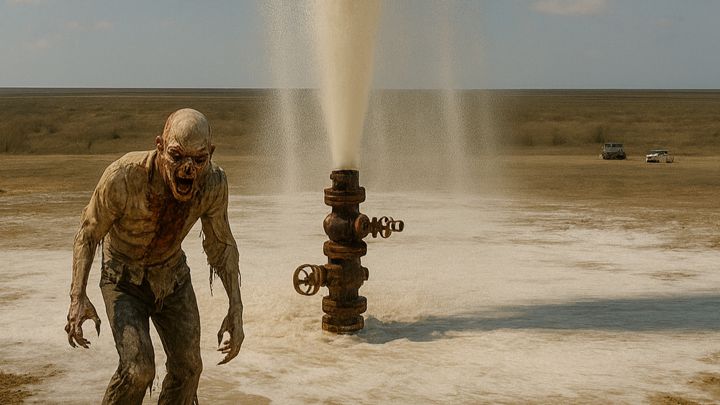
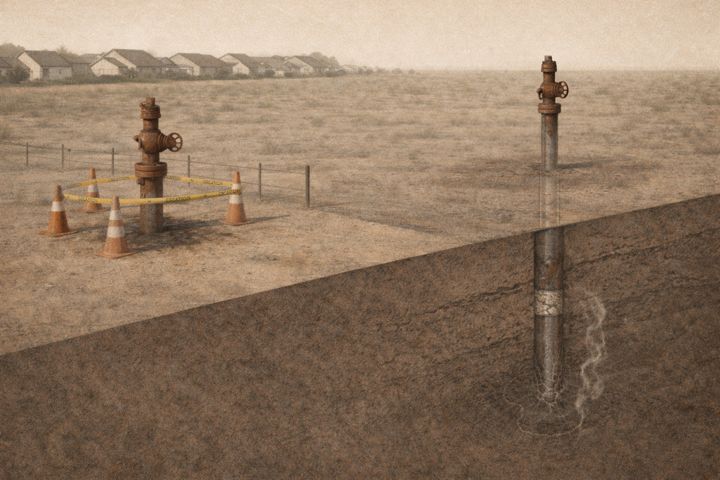
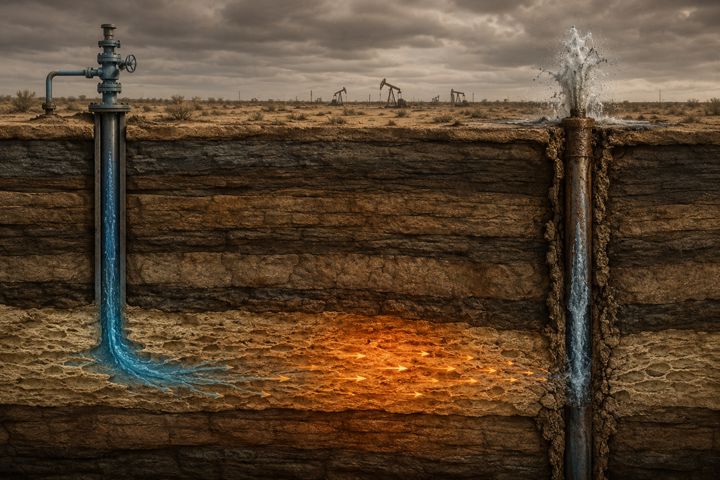
Crane County, Texas, January 2022, and what legacy well failure looks like
-
Article 2 · December 8, 2025
The terminology that shapes liability: abandoned vs. orphaned vs. zombie wells
Definitions and their consequences for funding eligibility and liability
-
Article 3 · December 11, 2025
The scale of America's abandoned well problem
National inventory figures and their uncertainty
-
Article 4 · December 16, 2025
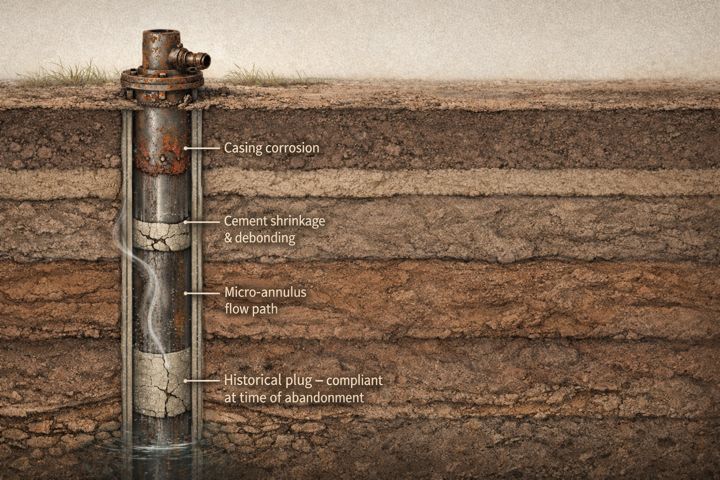
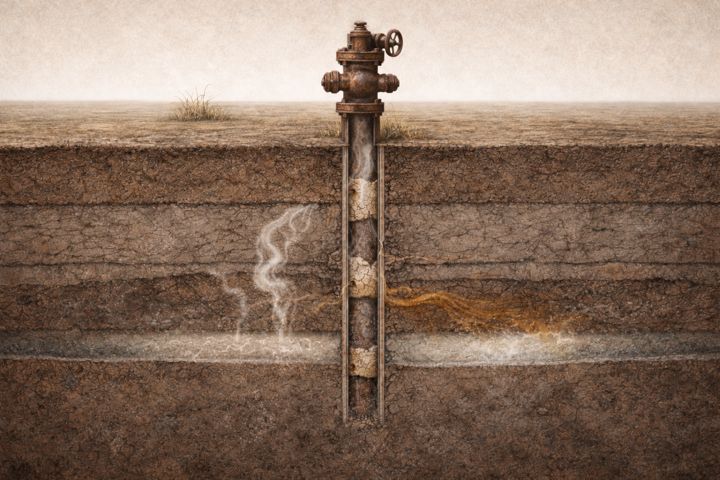
Why plugged oil and gas wells fail decades later: the engineering reality
Cement, casing, formation stress, thermal cycling, and historical plugging standards
-
Article 5 · December 22, 2025
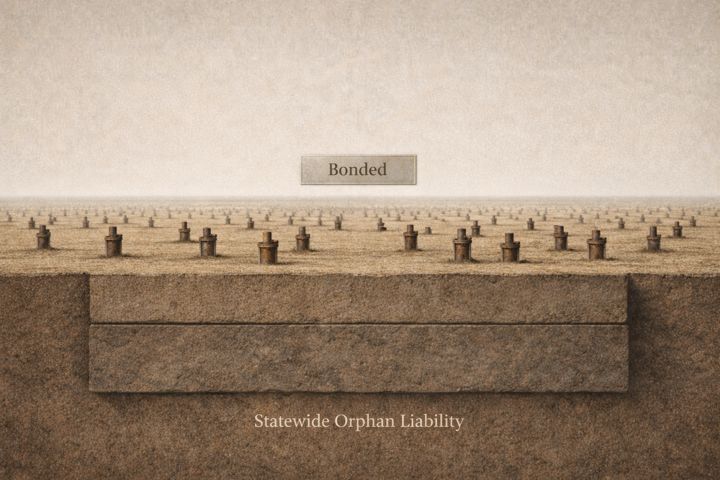
The bonding gap: why $10,000 can't cover a $71,000 problem
Financial assurance design against plugging cost
-
Article 6 · January 6, 2026
Risk-based triage and the illusion of control: how abandoned wells are prioritized and why the bonding gap persists
How states prioritize wells and why the gap persists
-
Article 7 · January 13, 2026
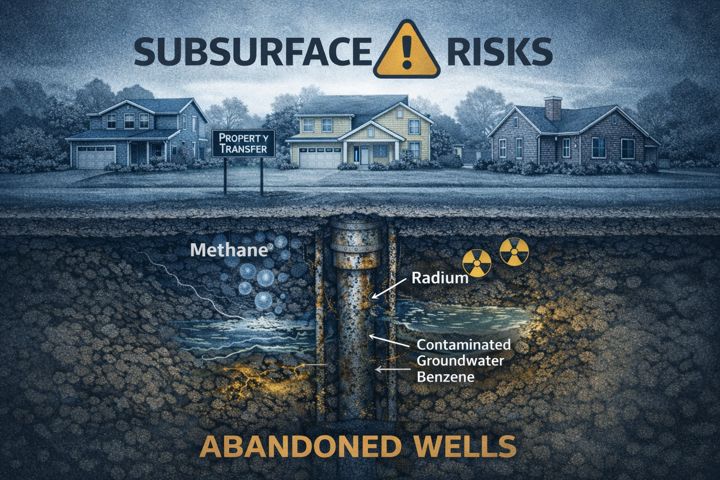
Methane, benzene, and radium: what's actually leaking from abandoned wells
Contaminants and how they're discovered
-
Article 8 · January 20, 2026
Landowners as monitors: How proximity drives discovery
Who finds failures, and the cost shift before liability is determined
-
Article 9 · January 27, 2026
Fraudulent transfer or legitimate business? The new liability theory for orphan wells
Transfer of end-of-life wells to weaker operators
-
Article 10 · February 3, 2026
Bankruptcy and the bill for plugging abandoned wells
Priority in bankruptcy, the Redwater decision, and US reliance on bonding
-
Article 11 · February 10, 2026
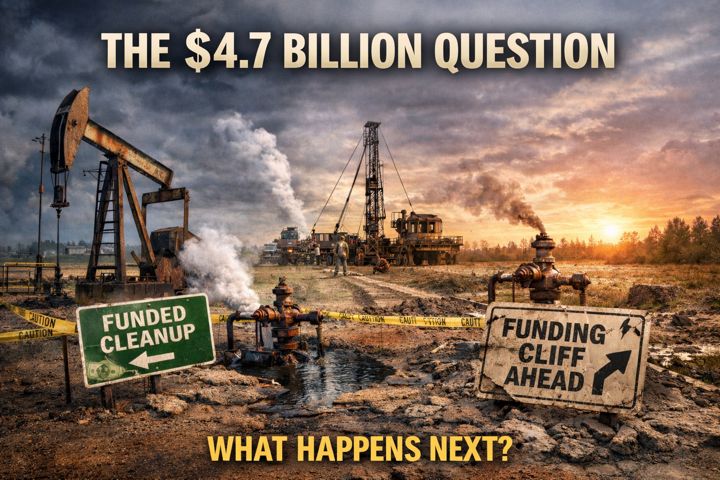
The $4.7 Billion Question: What happens when the orphan-well money runs out
IIJA funding measured against liability
-
Article 12 · February 17, 2026
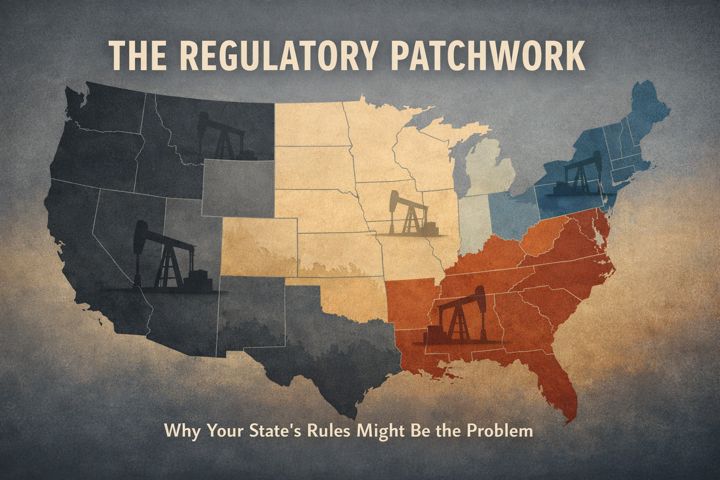
The regulatory patchwork: Why your state's rules might be the problem
Colorado, Pennsylvania, and state-by-state variation
-
Article 13 · February 24, 2026
The Remediation Industry: Why cleanup doesn't scale with the money
Plugging cost, workforce, and surge funding
-
Article 14 · March 3, 2026
From Liability to Asset: Geothermal, storage, and well conversion opportunities
Reuse pathways for legacy wells
-
Article 15 · March 10, 2026
Carbon Credits and Methane: Can abandoned wells pay for their own cleanup?
Methane carbon credits and additionality
-
Article 16 · March 17, 2026
The Litigation Frontier: How courts are starting to pull legacy well liabilities back into view
Litigation theories; written for attorneys
-
Article 17 · April 20, 2026
What the numbers actually show: Costs, benefits, and the case for targeting
RFF cost and benefit data and the case for prioritization
-
Article 18 · June 16, 2026
When the Basin Pushes Back: Injection pressure and the reactivation of legacy wells
Produced water injection and legacy wellbores
No articles carry that topic yet.
ABA SEER, April 2026
Designed to Fail
How Financial Assurance Frameworks Created America's Orphaned Well Crisis
Presented to the American Bar Association's Section of Environment, Energy, and Resources at its 55th Spring Conference on Environmental Law in Minneapolis, April 22 to 24, 2026, as a continuing legal education session.
The talk covers the definitional distinctions among abandoned, orphaned, and zombie wells and what they mean for federal funding eligibility and liability allocation; the national scale of the problem; the mechanisms by which plugged wells fail; the January 2022 Crane County, Texas blowout; the history of financial assurance frameworks and the bonding gap; bond coverage measured against actual plugging costs; state-by-state regulatory variation; BLM's 2024 bonding rule; and federal funding measured against liability. It describes how the frameworks were built and what they produced, and it doesn't recommend what to do about it.
Klimowski, S. (2026). Designed to Fail: How Financial Assurance Frameworks Created America's Orphaned Well Crisis. ABA Section of Environment, Energy, and Resources, 55th Spring Conference on Environmental Law, Minneapolis, MN, April 22 to 24, 2026.
average bond coverage of plugging liability across eight states with data
Carbon TrackerBLM's $10,000 lease bond minimum went unchanged, 1960 to 2024
BLMof estimated national liability covered by the $4.7B federal program
IIJA against Carbon TrackerScheduled
From Fredonia to the Forgotten
New York's Legacy Wells and the National Orphaned Well Crisis
New York State Council of Professional Geologists, Geology Days 2026, Saratoga Springs, New York, November 11 to 13, 2026. Steven Klimowski presents, with a New York professional geologist covering the local geology. The talk traces the state's legacy well inventory from the nation's first commercial gas well at Fredonia in 1825 to the orphan estimates of today, and takes up how plugs lose integrity, what failure looks like in shallow, century-old wells, how undocumented wells are found, and what incomplete records mean for site assessment.
The conference program lists the presentation under First Environment, where Steven works as a geophysicist and senior data analyst. The underlying research is the independent work of Subsurface Risk Analytics, and the material will be posted here after the talk.