
This is Article 3 in an ongoing series examining America's abandoned and orphaned well problem.
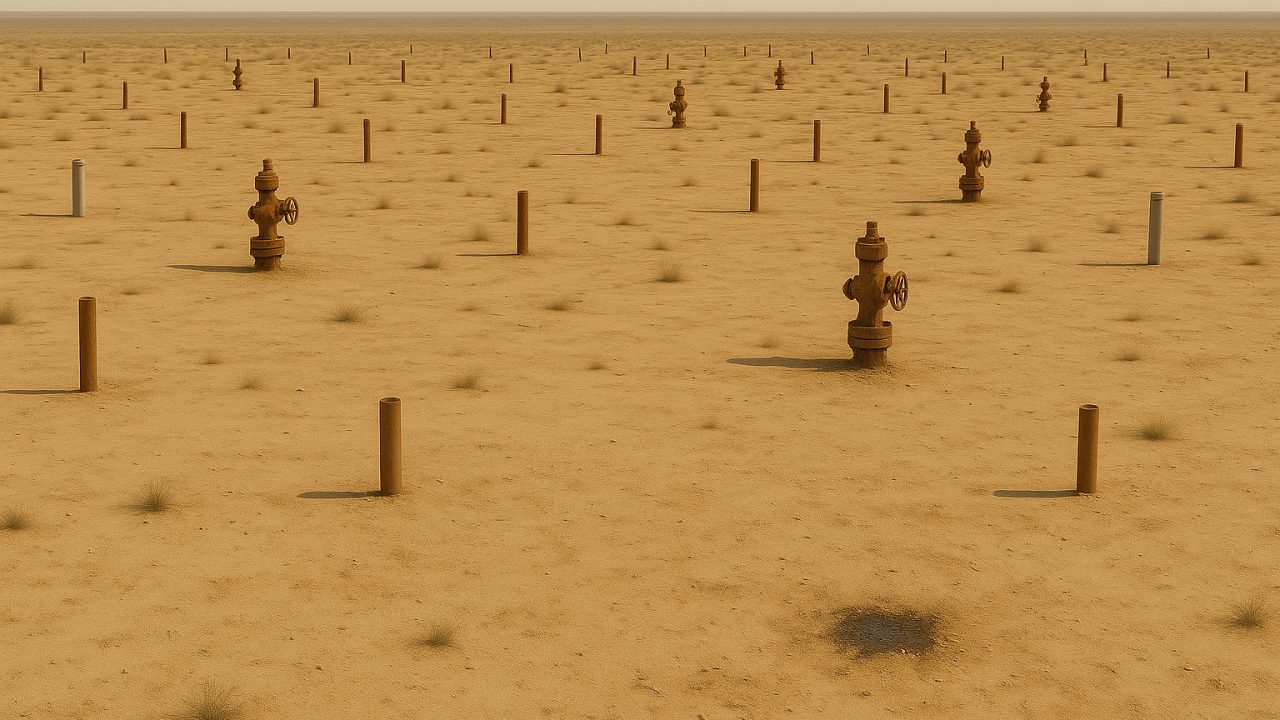
Millions of abandoned and orphaned oil and gas wells sit across the United States in various stages of decay. Most people never see them, and when the subject does come up, it's often framed as a narrow technical problem. It's a national liability that has been accumulating for more than a century.
When you step back and look at the numbers, the scale becomes hard to ignore.
How many abandoned wells exist?
- Estimated Total Wells: 3.7 to 3.9 million
- Unplugged Wells: ~2.2 million
- Annual Methane Emissions: Hundreds of thousands of tons
EPA-based analyses estimate there are about 3.7 to 3.9 million abandoned oil and gas wells in the United States, and roughly 2.2 million remain unplugged. When people first hear those numbers, disbelief is the usual reaction. The methane contribution from these wells is very real, on the order of hundreds of thousands of tons per year. For a short-lived gas with strong warming potential, that's a material climate impact rather than a background nuisance.
Clarifying the scope of these estimates. The ~2.2 million figure refers to abandoned and undocumented legacy wells, not just orphan wells. Orphaned wells are a narrower regulatory subset, those with no financially viable operator, currently documented at roughly 140,000 nationwide. Many academic studies that cite much lower counts focus specifically on methane-emitting wells rather than total well inventory, so they're answering a different question. Differences in published numbers reflect different definitions and analytical scopes, not disagreement about the existence or scale of the legacy well problem.
The orphan well count is only the part we can see
- Documented Orphaned Wells: ~142,000
- Estimated Undocumented: 260,000 to 740,000
- States with Deepest Inventories: Pennsylvania, Ohio, Oklahoma, Kentucky, Texas
States have documented close to 142,000 orphaned wells. Anyone who has spent time digging through historical drilling records knows how incomplete that picture is. The Interstate Oil and Gas Compact Commission (IOGCC) estimates another 260,000 to 740,000 orphaned wells remain undocumented.
Most of this stems from how the early oil industry operated. Wells were drilled, tested, put on production, and eventually walked away from, often with minimal paperwork. Pennsylvania, Ohio, Oklahoma, Kentucky, and Texas all carry deep inventories, and Pennsylvania alone expects that hundreds of thousands of abandoned wells may still be unlocated. That uncertainty isn't a small detail. It shapes how regulators and communities plan for risk.
Millions of people live near these wells
- Americans Within 1 Mile of Orphaned Well: 14 million
- California Idle Wells in High-Poverty Areas: 58%
Roughly 14 million Americans live within one mile of a documented orphaned well. That proximity matters. Methane leakage, vapor intrusion, groundwater pathways, and in rare cases even explosive gas migration can all originate from deteriorating wellbores. These issues tend to fall hardest on communities already carrying environmental burdens.
California illustrates this clearly. About 58 percent of the state's idle wells are located in communities with above-average poverty rates. The pattern reflects a long history of how energy infrastructure and land use evolved, often without the benefit of modern environmental protections.
Health research is starting to catch up to the problem
- USC Finding (Los Angeles): Reduced lung function comparable to secondhand smoke exposure
- University of Pittsburgh Finding (Pennsylvania): 5 to 7x increased lymphoma risk for children within 1 mile
A 2021 study by the University of Southern California found that residents living near Los Angeles urban wells experienced reduced lung function and higher respiratory symptom rates. The effect size was comparable to secondhand smoke exposure or living beside a busy freeway. Anyone familiar with Los Angeles air quality knows those aren't light comparisons.
Research from the University of Pittsburgh found that children living within one mile of unconventional gas wells in Pennsylvania were five to seven times more likely to develop lymphoma than those living farther away. The mechanisms continue to be studied, but the consistency of elevated risk is difficult to ignore.
Property markets notice these risks long before the public does
- Property Value Decline Near Orphaned Wells: 10 to 15%
One Pennsylvania study found that property values fell roughly 10 to 15 percent near dense clusters of orphaned wells. Buyers hesitate when there's uncertainty below the surface, and lenders hesitate even faster. Local governments then feel the downstream effect through reduced tax revenue. These impacts accumulate quietly, but the cumulative effect is meaningful.
The real cost of plugging wells
- Average State-Reported Cost (2021): $25,129
- Average State-Reported Cost (2023): $41,139
- RFF Median Cost (Plug + Reclaim): $76,000
- BLM Average Estimate: $71,000
- Projected Future Range: $112,500 to $180,000
- Total National Liability Estimate: ~$280 billion
Plugging wells is expensive and trending more so. State-reported averages increased from $25,129 in 2021 to $41,139 in 2023. Some shallow wells can be sealed for a few thousand dollars, while others, particularly older or compromised wells, reach into the hundreds of thousands.
Resources for the Future found a median cost of $76,000 to plug and reclaim a well. Plugging alone averages closer to $20,000, but reclamation is what restores the land and reduces long-term liabilities.
Federal data follow a similar pattern. The Bureau of Land Management (BLM) estimates an average cost of about $71,000 per well, with projections rising into the $112,500 to $180,000 range as the remaining inventory becomes more challenging. Carbon Tracker estimates that plugging the 2.6 million documented unplugged onshore wells may cost around $280 billion, not counting an additional 1.2 million wells that may exist but haven't yet been mapped.
These figures aren't abstract. They define the fiscal reality of the problem.
When an abandoned well is not actually dormant
- Location: Crane County, Texas (January 2022)
- Brine Released: ~15 million gallons
- Geyser Height: Up to 100 feet
- Duration: Two weeks
Sometimes the risk shows up all at once. In January 2022, an abandoned well in Crane County, Texas, suddenly failed. Nearly 15 million gallons of brine erupted across the landscape over two weeks. The geyser climbed to one hundred feet at times. The cleanup cost millions of dollars, and the damage to soil and ranch infrastructure was extensive. Incidents like this aren't daily events, but they aren't one-offs either. Many abandoned wells have been deteriorating quietly for decades.
What the Infrastructure Investment and Jobs Act covers
- Total IIJA Allocation: $4.7 billion
- Wells Plugged (as of late 2024): 9,636
- Wells in Disadvantaged Communities: 44%
- Funding Obligated: ~$1.3 billion
The Infrastructure Investment and Jobs Act (IIJA) allocates $4.7 billion to address orphaned wells nationwide. Most of the funding goes to states, with additional support for federal and Tribal lands. As of late 2024, 9,636 wells have been plugged, with about 44 percent in disadvantaged communities. Roughly $1.3 billion of the funding has been obligated.
For many states, this represents meaningful progress. Some have scaled their plugging programs faster than ever before.
The gap between funding and actual need
- Estimated National Liability: ~$280 billion
- Federal Funding Allocated: $4.7 billion
- Coverage Ratio: <2%
Even so, the gap between what's funded and what exists remains wide. If national liabilities approach $280 billion, the IIJA contribution should be viewed as a start rather than a solution.
The picture keeps expanding as undocumented wells continue to surface. Field surveys, LIDAR, magnetometry, old map reconstruction, and in some areas InSAR deformation studies regularly uncover wells that never appeared in any regulatory database. Each new discovery widens the scope of the problem.
A problem still growing in size and urgency
Most of these wells are older than the regulatory systems now responsible for them. Steel casing corrodes. Cement sheaths crack. Formations move. Over time, these processes create new pathways for fluids and gases, and once that happens the cost and complexity of plugging increase significantly.
Abandoned wells aren't a static liability. They change over time, and not in ways that make remediation easier.
Conclusion
The United States faces a multigenerational challenge in managing abandoned and orphaned wells. The risks are real, the costs well documented, and the inventories still incomplete. IIJA funding provided momentum, but maintaining that momentum will require sustained investment, modern detection tools, and clearer regulatory frameworks.
At some point, the question shifts from whether we can address the problem to whether we're prepared to match the scale of what actually exists.
Sources and Further Reading
EPA Greenhouse Gas Inventory https://www.epa.gov/ghgemissions/inventory-us-greenhouse-gas-emissions-and-sinks
Interstate Oil and Gas Compact Commission (IOGCC) https://oklahoma.gov/iogcc
Carbon Tracker: Billion Dollar Orphans https://carbontracker.org/reports/billion-dollar-orphans/
National Academies Workshop Proceedings https://www.nationalacademies.org
Environmental Defense Fund https://www.edf.org
Resources for the Future (RFF) https://www.rff.org/publications/journal-articles/decommissioning-orphaned-and-abandoned-oil-and-gas-wells-new-estimates-and-cost-drivers/
Government Accountability Office (GAO) https://www.gao.gov/products/gao-24-106229
Department of the Interior Orphaned Wells Program https://www.doi.gov/orphanedwells
Bureau of Land Management https://www.blm.gov