
About
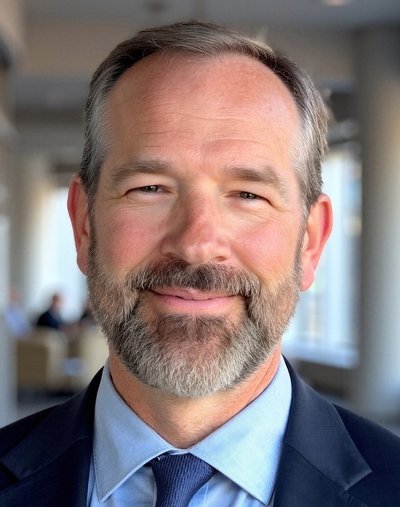
Steven Klimowski
A geophysicist with 35 years in oil and gas subsurface work, from the wellsite to the imaging center to the statistics that decide what a pressure record actually shows, and the founder of Subsurface Risk Analytics.
The work
Subsurface Risk Analytics is an independent analysis practice. It answers a narrow set of questions about legacy oil and gas wells: whether a wellbore can still hold what's being asked of it, whether injection pressure is reaching it, whether nearby seismicity fits the injection, and whether the financial assurance behind plugging actually covers the liability. Most of the wells involved were drilled decades ago, plugged to the standards of their day or not plugged at all, and now sit inside disposal permit areas, injection zones, and subsiding ground that nobody planned for when they were abandoned.
The research started in November 2025 as a personal project. I began a series on America's abandoned and orphaned well problem, covering failure mechanisms, financial assurance, well transfers, bankruptcy, litigation, and the effect of produced water injection on old wellbores. It found readers among operators, regulators, landowners, and environmental attorneys, and in April 2026 I presented the financial assurance research to the American Bar Association's Section of Environment, Energy, and Resources at its Spring Conference on Environmental Law. Subsurface Risk Analytics was formed in January 2026 to carry the work.
The practice supports environmental and energy counsel, landowners and pore space owners, regulators, and consulting firms that need a geophysicist who can read old well records, injection data, and pressure histories and say plainly what they do and don't show. Deliverables are technical memoranda and analysis you can audit, with the assumptions declared and the calculations left live in the workbook.
What the career built
A legacy well question usually needs four things at once: someone who has handled the tools that made the records, someone who can read the subsurface those records describe, someone who understands how steel and cement fail, and someone who can test a claim statistically instead of arguing about it. My career happens to have covered all four, in that order.
Wellsite and wellbore data
I started on the wireline truck. Open-hole and cased-hole logging, perforating, production logging, and cement bond logs, run and interpreted at the wellsite for completion decisions, plus a year as a district radiation safety engineer managing the compliance interface with the Nuclear Regulatory Commission. When I read a 1950s well file today, I know what the tool could and couldn't see.
Corrosion and integrity
Two years in a North Slope corrosion engineering group: corrosion tag analysis in producing wells, shear stress and corrosion analysis on flowlines, completion design review for corrosive environments, and the group's database of workovers, downhole configurations, and corrosion records. It's where casing, cement, and produced water stopped being abstractions.
Subsurface imaging
More than twenty years in seismic processing and imaging, most of it in Houston: anisotropic velocity models built with reflection tomography and full waveform inversion for the Gulf of Mexico, the North Sea, Brazil, West Africa, and Southeast Asia; wireline, VSP, and checkshot data from hundreds of wells used to constrain them; field quality control on land crews in Mexico, Ecuador, and Alaska; nine-component research at a university lab; and years training and supporting imaging teams across the Western Hemisphere.
Data engineering and applied statistics
The data side runs the whole length of the career, from a 1992 workover database through the machine learning and cloud pipeline work of the early 2020s to the GIS-enabled analytical dashboards I build now for federal environmental programs. In the legacy well work it shows up as replication: rebuilding another expert's model from its inputs, and testing whether a change in production lines up with its alleged cause using methods a reviewer can rerun.
Four chapters
The career reads more simply as periods than as employers. It began in the field in 1989, on an Arctic offshore platform assembling wireline tool strings, and ran through wellsite engineering and North Slope corrosion work until 1994. From 1994 to 2020 it was seismic imaging, in Colorado, Mexico, Austin, and Houston, with a master's degree and a stranded-gas venture in New Orleans along the way. After the 2020 industry cuts it turned to applied statistics and data engineering, first in telecommunications analytics and since December 2023 in environmental monitoring for federal programs. Since late 2025 it has been the orphaned well research and the practice built to carry it. The full chronological record, employer by employer, is on LinkedIn.
Education
Master of Arts, Energy & Earth Resources, The University of Texas at Austin, 2000. An interdisciplinary program across geosciences, engineering, economics, finance, law, and policy, with coursework in oil and gas law, energy law, electricity law, decision analysis, energy finance, and international petroleum concessions. Thesis: Commercialization of Remote Arctic Natural Gas. Research assistant at the Bureau of Economic Geology throughout.
Bachelor of Science, Geophysical Engineering, Colorado School of Mines, 1991. Minor in mathematics and geology.
United States Navy Reserve, 1988 to 1994, honorable discharge.
Memberships
- American Bar Association, Section of Environment, Energy, and Resources (ABA SEER)
- Society of Exploration Geophysicists (SEG)
- American Association of Petroleum Geologists (AAPG)
- Society of Petroleum Engineers (SPE)
Independence
The research and writing are independent work of Subsurface Risk Analytics, and a written agreement establishes that. I don't endorse candidates, policy proposals, or commercial products, and the analysis reads the same whichever side is reading it. Where a question has a political answer and a technical one, I give the technical one and stop.
Contact
Start with the question
Denver, Colorado. A first conversation is usually a short call.